LARGO RESILIENCE GROUP
Be ready before the lights go out Updated 12 October 2026
A red weather warning could bring power cuts, and with them dead phones, no mobile signal and no internet. The Largo Resilience Group is preparing a first response. This page is the plan. Print it and keep it with your emergency kit.
Largo Resilience Group
Our first response is a gathering place and neighbours helping neighbours. Wider emergency response comes from the emergency services.
Why we are preparing now
The Met Office is forecasting what it calls the largest El Niño in living memory, and expects a wetter, stormier autumn and early winter for the UK. Forecasters say this shifts the odds without predicting any particular storm. We do not know what this winter will bring. We do know that getting ready is far easier before a storm than during one.
When we step in, and when to stay home
We plan to respond only if a red weather warning is issued. Red is the Met Office’s most serious level. It means a risk to life is very likely, and power, travel and property could be badly affected.
While the storm is at its worst
If you are advised to stay home, stay home. Go indoors, close all windows and doors, and follow updates (on a battery or wind-up FM radio - if power is out).
Once things have calmed
When the worst has passed or flooding has eased, and you have not been told to stay home, the Durham Hall can open if it is safe and needed.
What we are, and are not
Wider emergency response comes from the emergency services, not from us. We are a first touchstone for our neighbours.
Three steps, starting at home
1. Your household
Write a home emergency plan on paper, with your key numbers and a meeting place close to home. Build a kit, and talk it through with the people you live with. ( Guidance suggests now is the best time to do this. !)
2. Your neighbours
Think about neighbours who may struggle: older people, people living alone, families with young children, anyone relying on electricity for medical or mobility equipment. Agree who checks on whom, and only go out when it is safe.
3. Our community
Know where the Durham Hall is, and that we may open it as a gathering place. Be ready to share what you need, and what you can offer.
Household safety: kit and grab bag
This follows Ready Scotland’s advice. You do not need to buy everything at once. Build a kit over time, and keep a copy of your home emergency plan in it and any important documents you may need, for instance, ID or insurance documents that you may not be able to get help without.
Home emergency kit
Three days of bottled water and food that needs no cooking. A torch and a radio, wind-up or with spare batteries. A power bank and phone charger. Medication and prescriptions. A first aid kit, toiletries and blankets. Pet supplies, baby food or formula if you need them.
Grab bag, if you may need to leave
If your home is at risk of flooding, or you may need to evacuate, keep a waterproof bag ready by the door. Put in copies of important documents such as insurance and photo ID, medical equipment and medication you rely on, spare keys, and any essentials you would need to hand.
Find your fuse box, gas meter and mains water stop tap now, while it is light. When the power goes off, switch off irons, ovens, electric fires and fryers, and leave one light on so you know when it returns.
Plan as if nothing works
A power cut can take down more than the lights. Household phones that need mains power may stop, mobile coverage may fail, and the internet may go. Do not count on calling anyone, or looking something up, once a storm is under way. That is why this page and Scottish Government advice asks you to prepare in advance.
Write your plan and key numbers on paper, and keep them with your kit.
Agree a meeting place with your household, and tell your neighbours what it is.
Charge phones and power banks as soon as a warning is issued, then use them sparingly.
Keep a battery, solar or wind-up FM radio, and write the local FM frequencies on your plan.
If you have a landline phone that does not need mains power, keep it.
The Durham Hall
Durham Wynd, Lower Largo
We will open the hall if it is safe and if it is needed. If the storm has calmed and you have not been told to stay home, and you can get there safely, come and see.
We will post on our newsletter and social media if we see trouble coming. A storm can move faster than a message, so we may be too late. Please do not wait to hear from us.
The needs and offers board
Tell us what you need, such as a battery pack, and what you can offer. If you cannot get to the hall, ask someone who can to put your need on the board for you.
What we could offer
The generator running. Phones charging. Cups of tea. Hot water bottles filled. It will be a case of mucking in, so bring what you can offer.
Do this now
Talk the plan through with the people you live with, and with your neighbours, before you need it. Hopefully we will not need any of it. If we do, we would rather have prepared together.
Write your home emergency plan on paper, with your numbers and a meeting place
Build or top up your kit, and pack a grab bag if you may need to leave
Find your fuse box, gas meter and water stop tap
Talk to your neighbours and agree who checks on whom
Learn where the Durham Hall is
Follow our newsletter and social media, and check Met Office warnings
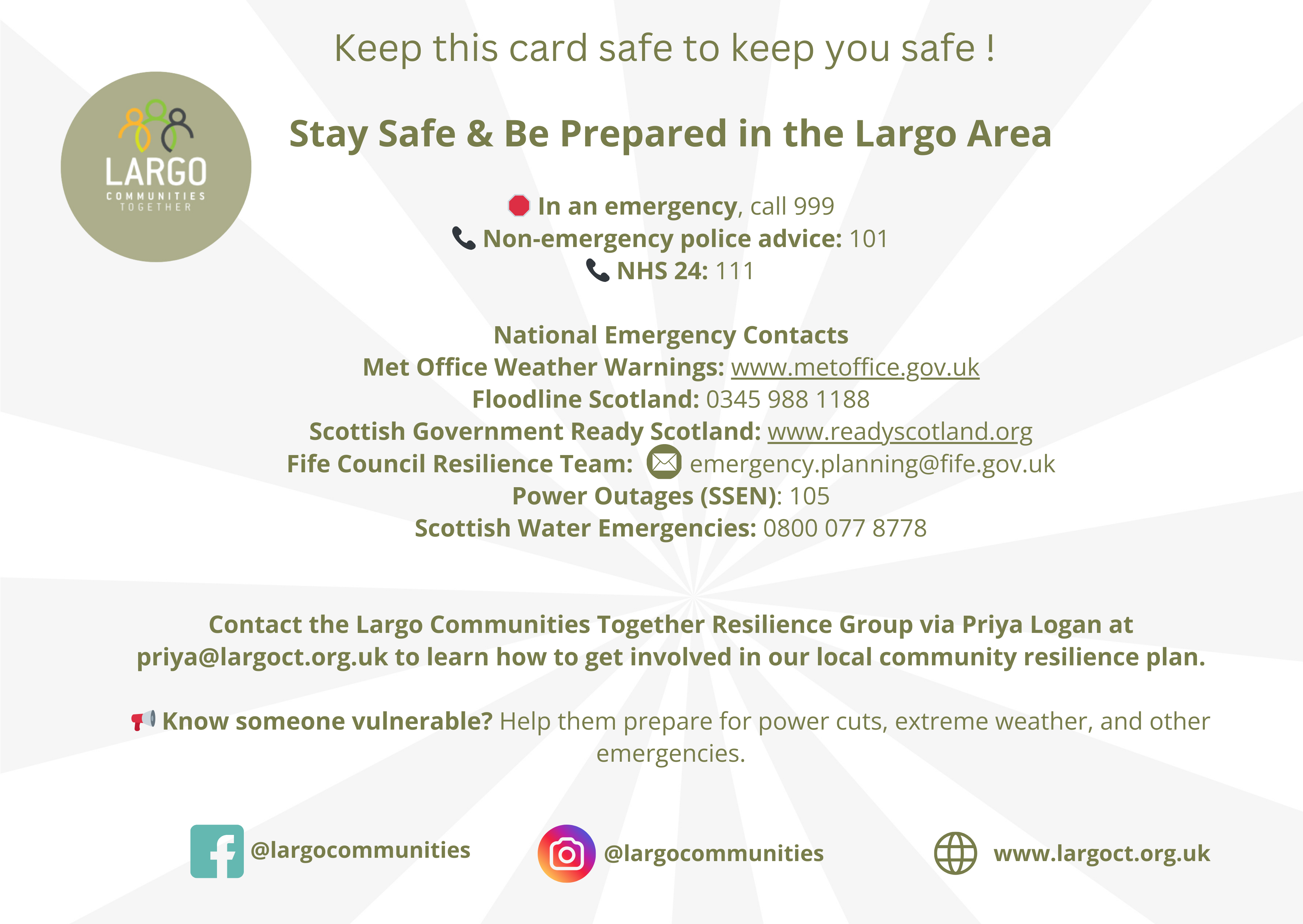
Numbers to write down
These need a working phone, so copy them onto paper now.
Numbers to know
- Emergency services: 999
- Police, non-emergency: 101
- NHS 24: 111
- Floodline Scotland: 0345 988 1188
- Loss of power: 105
- Gas emergencies: 0800 111 999
- Scottish Water: 0800 077 8778
- SEPA pollution hotline: 0800 80 70 60
Other useful websites and resources
- Met Office weather warnings: check current weather alerts and advice. https://www.metoffice.gov.uk/guide/weather/severe-weather-advice
- Floodline Scotland: flood alerts, updates and preparedness information. https://www.floodlinescotland.org.uk
- Power cut information and reporting (105): free 24/7 national helpline and website. https://www.powercut105.com
- Scottish Water: service issues and emergencies. https://www.scottishwater.co.uk/en/Help-and-Resources/Contact-Us
- NHS Inform: health information and guidance. https://www.nhsinform.scot
- Public Health Scotland: updates on health risks and public safety. https://www.publichealthscotland.scot
- SEPA pollution hotline: report environmental issues. 0800 80 70 60
Sources
- Home emergency plan, Ready Scotland: https://ready.scot/prepare/emergency-plan
- Make an emergency kit, Ready Scotland: https://ready.campaign.gov.scot/emergency-kit
- Loss of utilities and power cuts, Ready Scotland: https://ready.scot/respond/loss-utilities
- What do the warning colours mean, Met Office: https://www.metoffice.gov.uk/public/weather/warnings
- An ‘unprecedented’ El Niño and its implications for the weather forecast, Met Office: https://www.metoffice.gov.uk/blog/2026/an-unprecedented-el-nio-and-its-implications-for-the-weather-forecast